
When you climb into a car or board a domestic flight, the last thing on your mind is the engine block, the landing gear actuator, or the dozens of small aluminum fittings holding everything together. That’s the point. The components inside the vehicles most Americans use every day are designed to disappear, to function so reliably that you never stop to consider them. But reliability this consistent doesn’t happen by accident. It’s the product of manufacturing processes precise enough that variation from one part to the next gets measured in fractions of a millimeter.
The gap between a part that works and one that fails often comes down to tolerance, meaning the margin of error a manufacturer is willing to accept. In automotive and aerospace applications, that margin is typically measured in thousandths of an inch. Understanding how those standards get met helps explain why precision manufacturing has become so central to modern transportation, and why the quality of machining directly affects how safe your next road trip turns out to be.
Why Tight Tolerances Define Automotive Component Quality
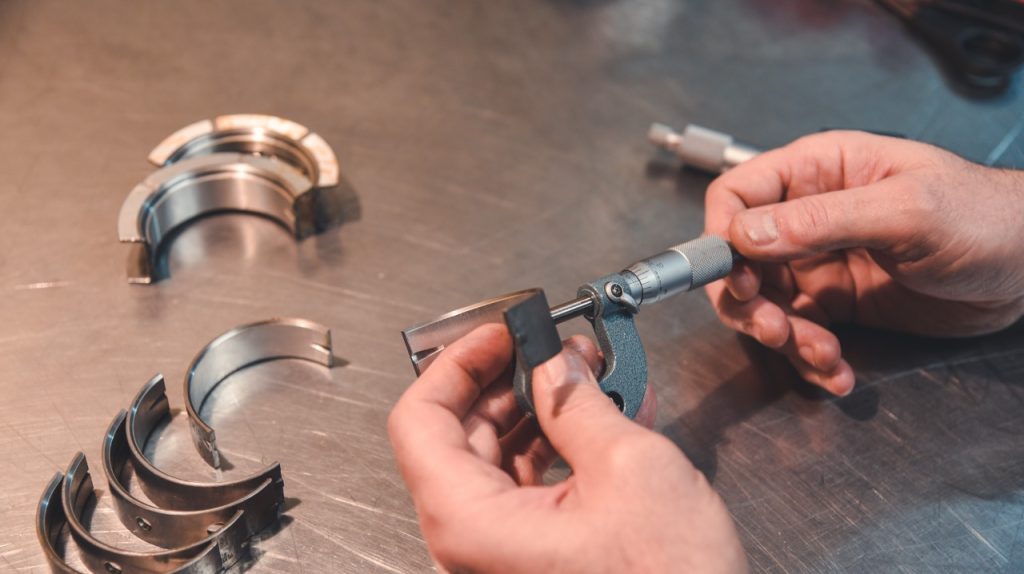
Most people think of machining as cutting metal, which is accurate but incomplete. A CNC machining service that specializes in automotive components isn’t just removing material from a billet of steel or aluminum. The process involves programming toolpaths to fractions of a millimeter, controlling spindle speed and feed rate simultaneously, and verifying dimensional accuracy across dozens of features on a single part before it leaves the shop floor.
The stakes make this necessary. An engine crankshaft runs at several thousand RPM inside a vehicle. If the surface finish on the crankshaft journals is rough, or if the diameter is off by more than a few microns, bearing wear accelerates and engine life shortens. The same principle applies to brake calipers, transmission housings, and fuel injector bodies. In each case, the machining process is what makes a specification real rather than theoretical. According to the National Institute of Standards and Technology, companies that invest in precision machining processes have achieved up to 67% reductions in tool assembly time while simultaneously improving part quality.
The Gap Between Job Shop CNC and Aerospace-Grade Machining
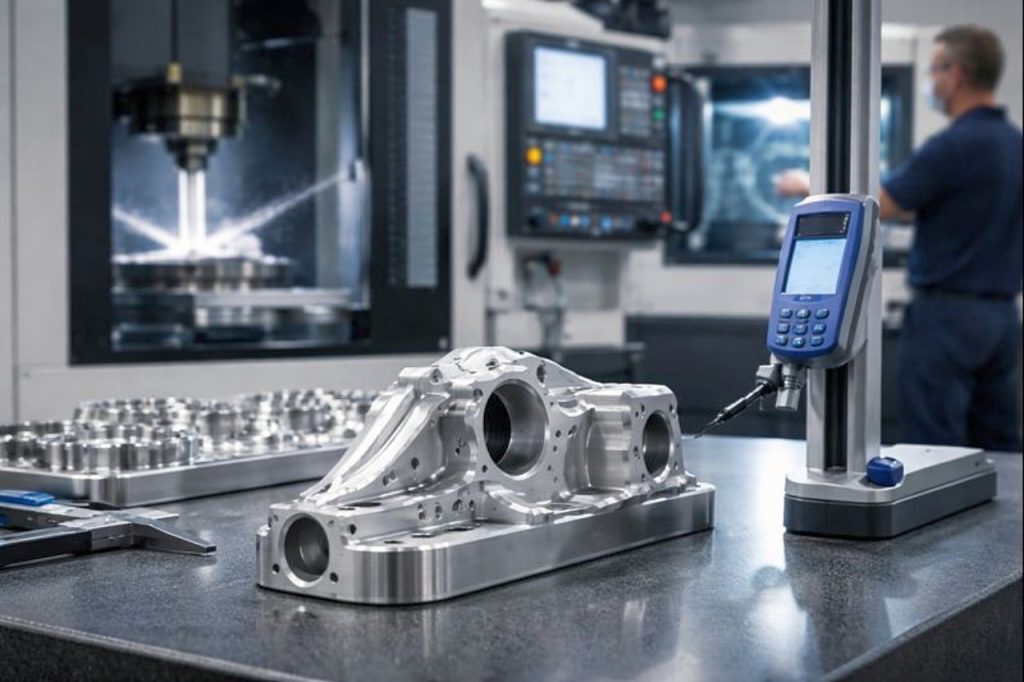
The label “CNC machining” covers an enormous range of capability. A small job shop running two-axis turning centers serves a completely different customer than a facility running five-axis machining centers with in-process measurement and automated tool change systems. The distinction matters when a part will end up inside a vehicle that carries people.
Aerospace-grade machining involves controlled environments, documented tooling, material certifications, and first-article inspection reports that follow the part through the supply chain. A landing gear bracket machined to aerospace tolerances has a paper trail that starts at the metal mill and follows it through every operation until it ships. This documentation exists because when something does fail, tracing the root cause to a specific batch of material or a specific tool life event makes the difference between a systematic fix and a repeat problem. That level of process control is genuinely difficult to replicate and one of the clearest separators between capable suppliers and unreliable ones.
How Machining Advances Changed the Weight of Modern Vehicles
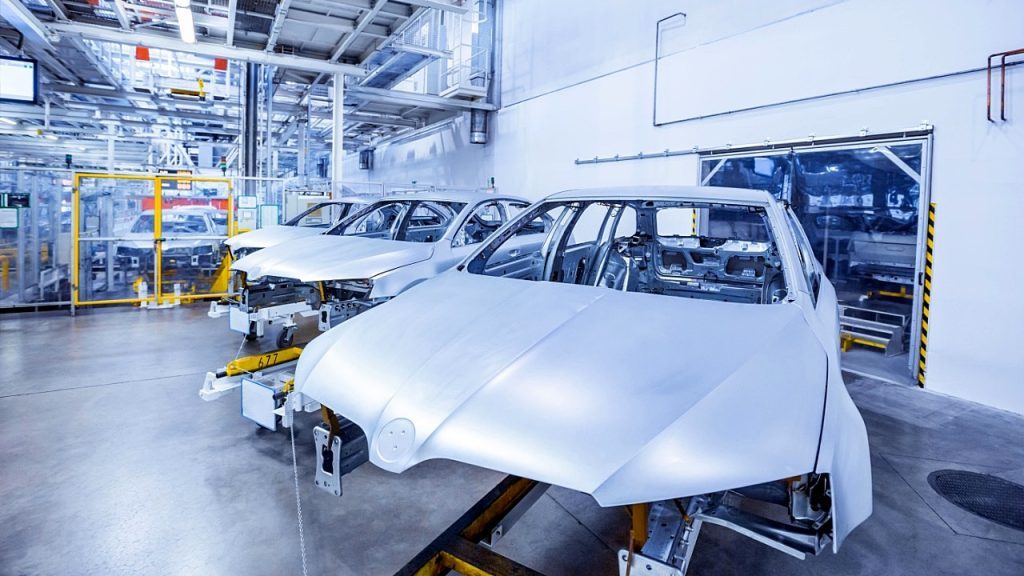
Modern vehicles are lighter and more fuel-efficient than those built thirty years ago. A significant portion of that gain traces back to improvements in machining capability rather than to design changes alone. When machine tools became precise enough to hold tight tolerances in aluminum, engineers could redesign components that were previously made from heavier steel. Engine blocks, suspension uprights, wheel carriers, and structural brackets all got lighter as the machining process became more capable.
This shift accelerated in the early 2000s when five-axis machining became widely available outside of aerospace. Suddenly, a complex surface that previously required multiple setups (each of which introduced cumulative positioning error) could be machined in a single clamping. The result was better geometric accuracy and lower per-part cost. Travelers feel the downstream effect every time they see a fuel economy figure on a new vehicle window sticker, or when a car reaches 150,000 miles without significant drivetrain issues. The machined parts inside made that outcome possible.
Safety Compliance and What It Does to Part Consistency

Vehicle manufacturing is one of the most closely watched industries when it comes to component specifications. The parts that go into brake systems, steering assemblies, and structural safety components are subject to dimensional tolerances that manufacturers must document and verify before a vehicle enters production. The goal is predictability: a part that meets specification consistently behaves the same way whether it’s the first unit off the line or the ten-thousandth.
Machining environments themselves carry significant safety requirements. The Occupational Safety and Health Administration mandates that machine tools operating in manufacturing facilities meet specific guarding and operational standards. A practical side effect of compliance is equipment that runs within calibrated parameters, which means tighter dimensional control over the parts it produces. Shops that maintain these standards tend to produce more consistent output, not because the regulation demands part quality directly, but because the same operating discipline that prevents worker injury also prevents the kind of equipment drift that causes out-of-spec parts.
What to Look For When Evaluating a Machining Supplier
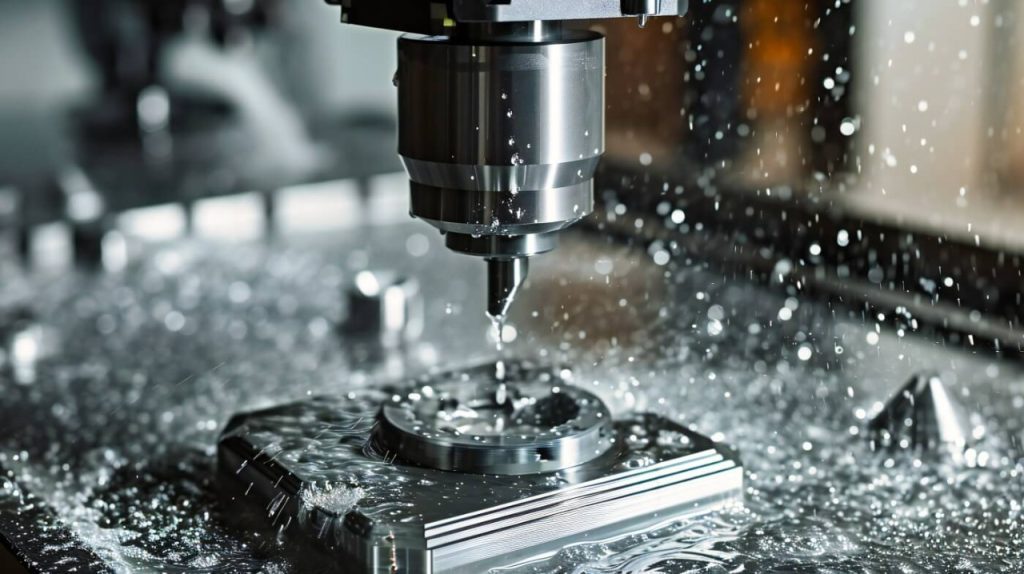
Not every machining shop is equipped to handle vehicle-grade parts, and the difference between adequate and excellent isn’t always obvious from a capability list. A shop with five-axis equipment might still lack the quality management systems, the measurement equipment, or the materials expertise needed to serve automotive or aerospace customers.
The questions worth asking before committing to a supplier: Do they hold ISO 9001 certification, or are they actively working toward it? What does their inspection process look like, and do they issue CMM reports with each delivery? Can they machine the specific alloys your design calls for, or will they push back toward materials that are easier to run but not necessarily suitable? These aren’t trick questions. They reflect the kind of due diligence that separates a short-term supply relationship from one that lasts because the parts consistently meet specification, delivery after delivery.